AUTOMATED FILE-BASED CAPTIONING
AI Video Captioning for Prerecorded Media Files
MUXEVO processes completed audio and video files asynchronously. AI accelerates transcription, timing and optional scene understanding; a human operator retains control over review, corrections and final approval.
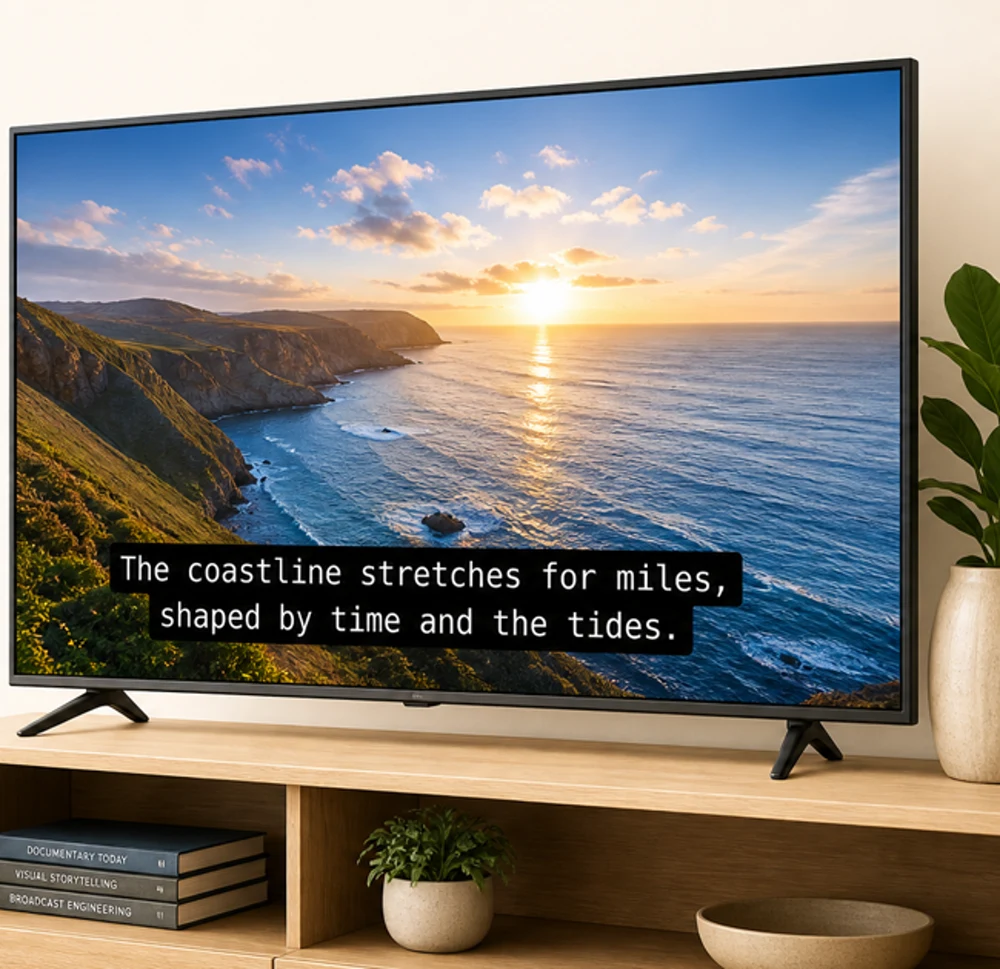
Automatic captions without pretending the work is live
MUXEVO is built for uploaded media files—not microphones, meetings or live broadcast feeds. The service measures the complete program, transcribes its English dialogue and builds timed caption cues for review and output.
Progress reporting follows the actual file through transcription and any selected analysis so long-running media does not appear stalled.
Optional picture and sound intelligence
AI-aware caption placement can analyze sampled video frames for lower-thirds and chyrons, keeping captions in the lower portion of the picture first and moving them upward when necessary. Optional sound analysis can identify relevant music and sound events for descriptive captions.
These are selectable processing options, allowing media teams to choose the level of automation appropriate for each file.
AI-assisted does not mean unreviewed
Eligible workflows add caption editing, draft revisions, content flags and QC previews so a human operator can correct names, terminology, timing and presentation before approval.
For broadcast delivery, MUXEVO can produce a supported MXF master with native CEA-708 services, CEA-608 compatibility captions and independent post-encode inspection.
Frequently asked questions.
Is AI captioning the same as live captioning?
No. MUXEVO's AI captioning processes uploaded prerecorded files and does not provide a live caption feed.
Does AI replace human caption review?
No. AI accelerates caption creation. Plans with review tools allow a human operator to inspect, revise and approve captions before final re-embedding and delivery.
Can AI keep captions away from lower-third graphics?
The optional AI-aware placement service samples the picture for likely chyrons and can place captions toward the top when lower-screen graphics are present.